
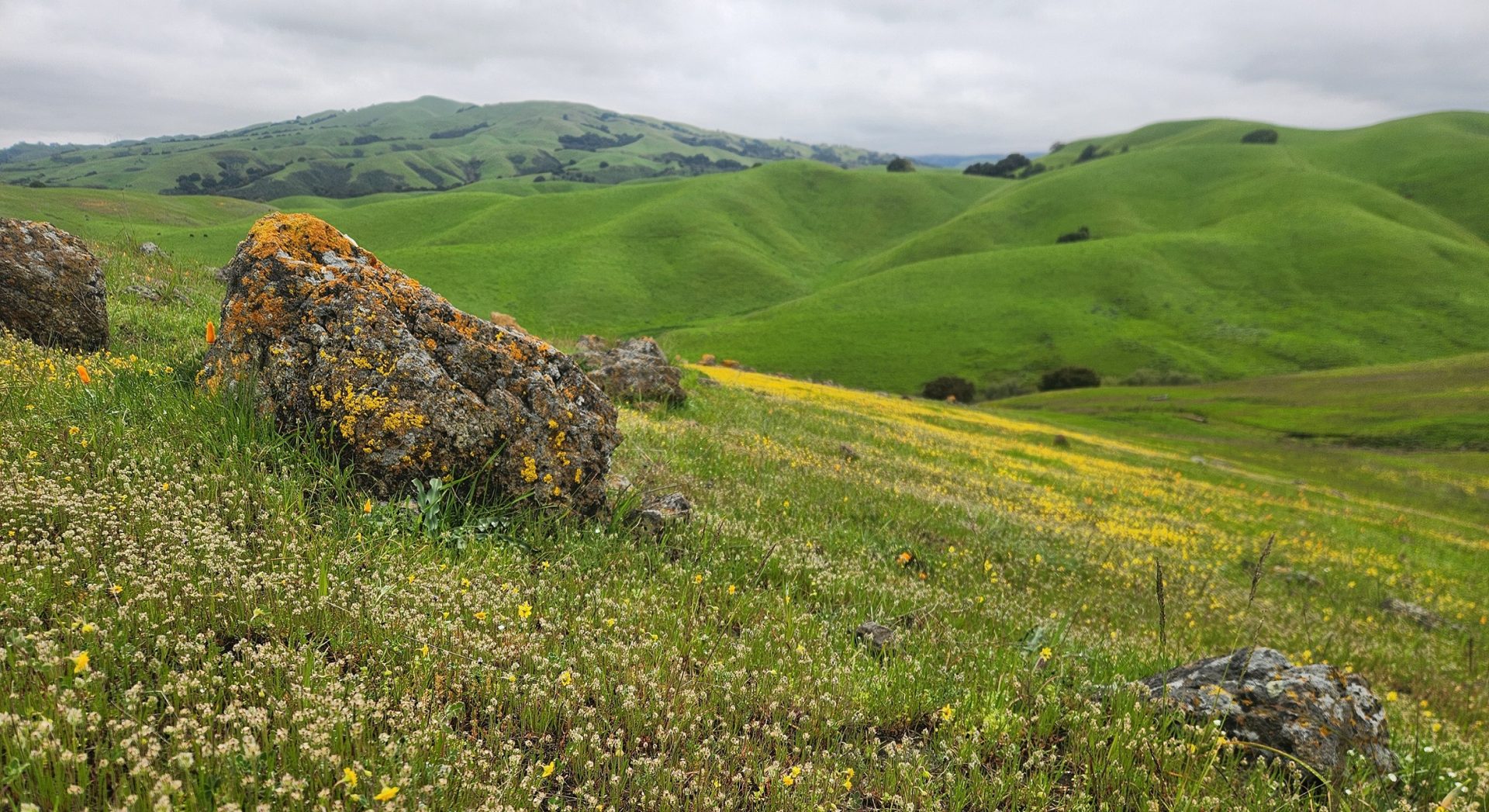
Rural areas across Santa Clara County are under threat from a flood of harmful “builder’s remedy” development proposals that would hurt people and wildlife. Almost all of these projects are located on prime farmland or hillside habitat, in floodplains or wildfire hazard areas, and lack water and sewer access. If approved, these projects would result in an unprecedented loss of farmland and open space throughout unincorporated Santa Clara County. Please tell the County Supervisors that you support the County’s longstanding policies protecting farmland and open space!
What Is the “Builder’s Remedy” and How Does It Affect Santa Clara County?
California’s “builder’s remedy” law says that if a city or county doesn’t have a state-approved plan for building enough homes (called a Housing Element), developers can ignore local zoning rules and build anywhere they wish, as long as the project fits certain criteria. The purpose of the law is to make sure cities and counties don’t shirk their responsibility to build housing.
Unfortunately, developers recently took inappropriate advantage of this law to submit more than 40 proposals* to build sprawl development (totaling over 7,500 homes) in rural areas of Santa Clara County. This happened during the window of time when the county’s Housing Element had not yet been approved by the state. The proposed projects are in areas that are inappropriate for development and will result in harm to local communities and nature. What concerns us most is the loss of much of the County’s farmland and open space if all of the proposals are allowed to go forward.
However, there is hope. State law says the builder’s remedy does not apply to land that is zoned for agriculture or resource preservation, if that land is surrounded on at least two sides by other land being used for agriculture or resource preservation. The builder’s remedy also doesn’t apply to land that lacks adequate water or wastewater facilities. Nearly all of the parcels where builder’s remedy projects have been proposed in the unincorporated County fit at least one of these criteria, which in theory ought to allow the County to deny the proposals. But this hasn’t stopped developers from submitting these proposals – possibly hoping that the County will feel pressured to approve them despite their not fully conforming to the builder’s remedy law.
Why Are These Builder’s Remedy Projects Harmful?
These proposed projects are almost all in rural unincorporated areas, which means they are sprawl development. Sprawl is harmful because it destroys nature, increases climate impacts, puts people in harm’s way, and is costly to taxpayers.
When thousands of new single-family homes are built in areas far from jobs and without public transit options, residents have no choice but to get in their cars and drive everywhere they go, increasing greenhouse gas emissions. This increases air pollution, clogs roads and highways with traffic, and worsens the climate crisis.
Many of these builder’s remedy projects are also in hazard zones for floods, wildfires, or landslides. Eight of the proposals (over 3,100 homes) are partly or entirely in FEMA flood zones. Seventeen of the proposals (over 1,800 homes) are in wildfire hazard zones. Thirteen of the proposals (over 1,300 homes) are in landslide hazard zones. That’s a lot of people who would be living in areas subject to natural disasters.
These builder’s remedy projects would also destroy farmland and wildlife habitat. Twenty of the proposals (over 5,800 homes and over 750 acres) are located partly or entirely on prime farmland – an irreplaceable resource for local agriculture. Twelve of the proposals (over 1,100 homes and over 640 acres) are on hillsides covered with dense forests, oak woodland, or grassland habitat. And five of the proposals are on sites that have creeks running right through them. Since creeks and streams are critical in our region as wildlife habitat and wildlife movement pathways, these projects have the potential to significantly impact the survival of local wildlife.
More details about a few of the more egregious builder’s remedy projects:
- Silver Creek Valley Estates – 77 homes in the hills south of San Jose, in a high fire hazard and landslide zone. This site contains rare serpentine grassland habitat and a creek that is breeding habitat for threatened California red-legged frogs. This site is directly adjacent to the Richmond Ranch open space property, which is home to 13 threatened or endangered animals and plants, including Bay checkerspot and monarch butterflies, Golden Eagles, and mountain lions.
- Castro Valley Road Project (also known as “South Gilroy”) – 1,632 homes on hundreds of acres of prime farmland south of Gilroy, in a FEMA floodplain on the banks of a stream that’s habitat for threatened steelhead trout.
- Mountain Winery – 237 homes and an 81-room hotel on the site of Mountain Winery in the hills west of Saratoga, in a high fire hazard and landslide zone in the middle of an oak woodland.
Finally, these builder’s remedy projects are simply bad from an economic perspective. There’s a good reason why our local and state laws tell us to focus residential development in urban areas – because it’s expensive and difficult to provide services like water and sewer service, police and fire protection, and everything else that people need to far-flung developments in rural areas. Santa Clara County doesn’t have the capacity to provide those services to thousands of new homes scattered all over the county, from east of Milpitas to south of Gilroy to west of Saratoga – many of them up in the hillsides where access is difficult. Ultimately, the cost of servicing all these new homes will be borne by taxpayers.
What You Can Do
For decades, Santa Clara County has had strong policies preventing sprawl and protecting rural lands from development. State law also provides exceptions to the builder’s remedy for projects like the ones proposed to the County. But the developers submitting these builder’s remedy proposals may be hoping to pressure the County to approve their projects anyway.
County Supervisors need to hear from us that we support the County’s long-standing anti-sprawl policies. Please use the online form on this page to tell the Supervisors that you support the County’s policies protecting farmland and open space from sprawl!
* Information in this article, including the number of builder’s remedy proposals, is based on information contained in Santa Clara County’s SB 330 Projects List and Interactive Property Profile Map, and is current as of the date of publication of this article.
The online form is no longer available.