
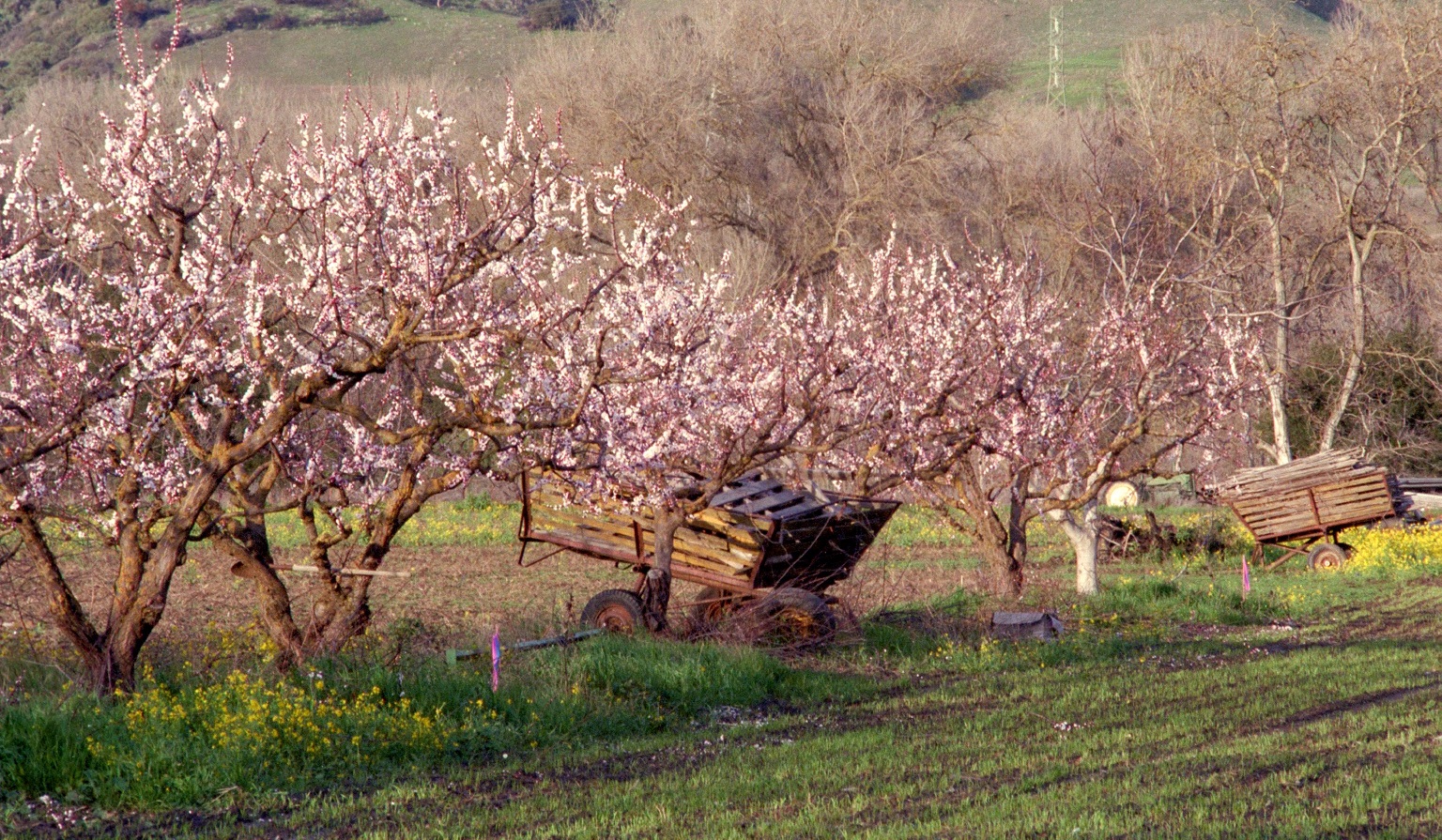
Local farmland is a critical natural resource that is continually under threat of development. As Santa Clara County updates its zoning rules for development in rural unincorporated areas, Green Foothills is urging the County to ensure that these zoning amendments preserve important farmland, support local agriculture, and prevent oversized development from creeping into rural communities.
Changes to Rural Zoning Can Prevent Further Loss of Farmland
The rural zoning amendments were prompted by the County’s recognition that ongoing development threats to farmland are not being adequately addressed by the current regulations. Once known as the “Valley of Heart’s Delight” due to the beauty of its blossoming orchards in springtime, Santa Clara County has lost most of its historic farmland, with over 21,000 acres converted to development just since the 1980’s. Despite this, Santa Clara County still boasts over 1,000 active farms, 50 wineries, and thousands of acres of ranches. The myth – put forward by developers – that farming is somehow not viable in Santa Clara County is contradicted by this evidence of a thriving agricultural economy right here in Silicon Valley.
But development continues to threaten our farmland. The County estimates that over 28,000 acres of remaining farmland and rangeland are at risk of development in the near future. Current proposals for destructive residential sprawl in the rural areas, including on prime farmland, highlight this danger.
The County’s planned updates to the zoning code are intended to address this problem. The County has already created an initial draft, which it is now revising in response to feedback from small farms and horse facilities. We are urging the County to ensure that the final draft continues to prioritize the core goals of preserving important farmland, restricting the size of development on rural parcels, and requiring that any agritourism be connected to and support local agriculture.
Limiting Oversized and Inappropriate Development
Oversized, inappropriate development in rural areas destroys farmland and wildlife habitat, blocks wildlife movement pathways, and increases greenhouse gas emissions. Currently, the County’s rules governing the size and scale of development projects are vague and subjective, leading to confusion on the part of project applicants and lengthy, expensive approval processes. To solve this problem, the County has proposed an objective standard where the total footprint of new development could not exceed 10,000 square feet per parcel – a generous limitation that would still allow extremely large structures to be built.
Balancing Agritourism with Farmland Preservation
Agritourism, which blends farming with entertainment and education, is a critical part of the county’s agricultural economy. Farms must be able to augment their revenue with operations such as U-pick farms, pumpkin patches, farmstays, and educational experiences. At the same time, there is a very real danger of allowing agritourism to displace actual agriculture. This could result in precious prime farmland soils being converted to “fake ag” uses such as event venues masquerading as “wineries” where the only grapes grown are purely decorative, or commercial retail outlets masquerading as “farmstands” that don’t actually sell locally grown produce. There’s a place for those types of commercial uses – on commercially zoned land within cities. Agricultural land, by contrast, needs to be preserved for agriculture.
High-quality farmland soils are an irreplaceable resource for local agriculture and for the community. The State of California designates prime farmland, farmland of statewide importance, unique farmland, farmland of local importance, and farmland of local potential based on criteria such as the physical and chemical composition of the soil, the location, and other characteristics that are specific to a particular piece of land. If these soils are paved over for development, they are unlikely to ever be returned to a natural condition – which means they are lost forever for farming.
To protect our area’s remaining high-quality farmland, the County has proposed requiring agricultural sales and events (wineries or farmstands, for example) to include actual farming on the same site. The definition of on-site agriculture will be revised to incorporate feedback from local farmers about the realities of farming in Santa Clara County, but the revised rules must achieve the goal of preserving important farmland for farming, not for development.
The County’s initial draft of the rural zoning amendments drew criticism from some local farms and horse-related businesses, who were concerned that the changes could negatively affect their operations. For example, the draft amendments proposed removing riding stables and horse breeding from the definition of “agriculture.” In response, the Board of Supervisors directed County Planning staff to revise the draft amendments and to conduct a robust public process to gather input from the community.
What’s Next?
We welcome revisions to the draft amendments that protect local small farms and horse facilities, and we value the role of agritourism in strengthening our rural communities. At the same time, as a conservation organization, our priority is to make sure the rules prioritize preserving farmland and open space, keeping development at an appropriate scale, and ensuring that agritourism truly supports and enhances local farming.
Green Foothills continues to monitor the progress of the County’s proposed rural zoning amendments. We will continue to provide input to County leaders on this topic, and we will participate in the public process as it moves forward.
Want to stay updated on this issue? Sign up for our e-newsletter at greenfoothills.org/subscribe.