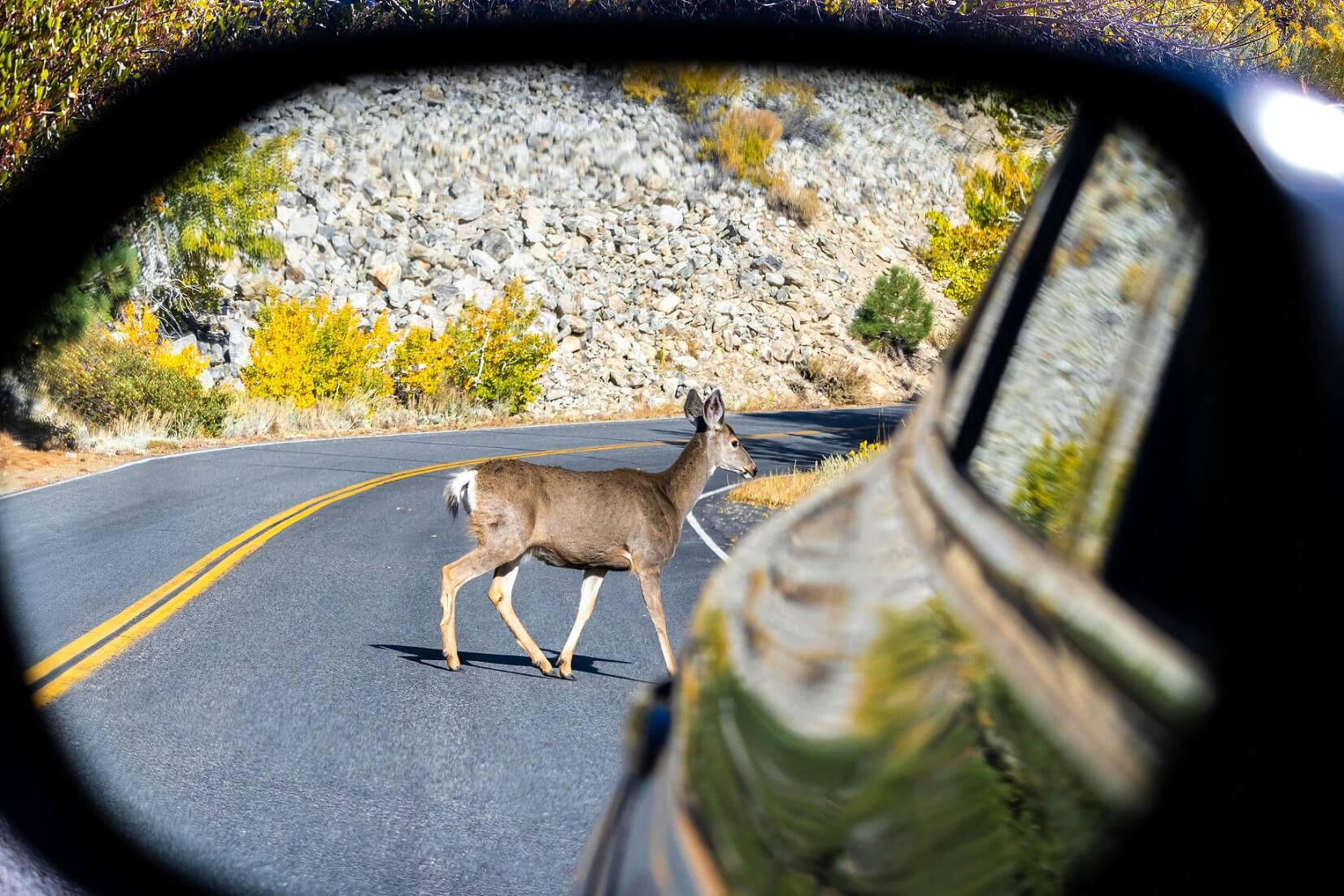
California’s crisscrossing highways create fragmented patches of habitat and box in wildlife, forcing animals to cross busy lanes of traffic and risk their own lives and those of drivers. But the California legislature is considering a bill, SB 1250, that would require wildlife movement to be considered in the state’s transportation planning. Green Foothills is working to achieve passage of SB 1250 to save the lives of both people and wildlife.
Safe Wildlife Crossings Are Essential
Animals need to be able to move freely across the landscape to find food and mates. When they cannot safely cross major roadways, they can become boxed into small areas of territory, which threatens their ability to thrive and survive. As the impacts of climate change become more severe across the state, animals must be able to move to different locations to adapt to changing conditions and to flee natural disasters. Movement between territories is also essential for genetic diversity, which keeps wildlife populations healthy. We are already starting to see the harmful impacts of inbreeding in wildlife populations across California. Small islands of habitat bordered by development cannot sustain healthy wildlife populations, so, with no other option, animals take the risk of crossing busy highways. The result is that tens of thousands of animals are killed on California roads every year.
And animals are not the only ones in danger. Every year, there are over 7,000 vehicle collisions with deer or other large animals in California. Thousands of these incidents result in human injuries or deaths, either from direct collisions with wildlife or from crashes caused when cars swerve to avoid impact. Wildlife-vehicle collisions cost Californians over $200 million annually in property damage and emergency response.
SB 1250 Makes Wildlife Crossings a Caltrans Core Objective
To address these concerns, State Senator Dave Cortese has introduced SB 1250. This bill would make improving wildlife connectivity part of the California Department of Transportation’s (Caltrans) core planning process. Caltrans would need to prioritize wildlife connectivity infrastructure, such as underpasses, culverts, overpasses, habitat corridors, and fencing, just as they prioritize pavement conditions or bridge safety. Caltrans’ planning would be required to identify both the need for new connectivity infrastructure, and the condition of existing infrastructure. This means that, instead of treating the development and maintenance of wildlife crossings as a one-off conservation project, crossings and other infrastructure would be integrated into routine highway projects. This would allow for more effective planning, faster implementation, and more efficient use of funds.
SB 1250 also requires increased collaboration between the California Department of Fish and Wildlife (CDFW) and Caltrans, and opportunities for public input. If the bill passes, Caltrans and CDFW would be required to jointly develop a plan to implement measures that protect, conserve, and improve the state’s wildlife, landscapes, and natural resources. The two agencies would also be required to create, and regularly update, an inventory of the state highway system that highlights where infrastructure is needed to support safe wildlife movement and prevent wildlife-vehicle collisions.
Green Foothills has been working with other environmental organizations to get SB 1250 passed, coordinating with Senator Cortese’s office and participating in communication efforts throughout the legislative session. SB 1250 has received broad support in the Legislature, and will next be heard by the Assembly Appropriations Committee in August. We call on the Legislature and Governor Newsom to pass this bill. It is the responsible choice for the safety of wildlife and people.