
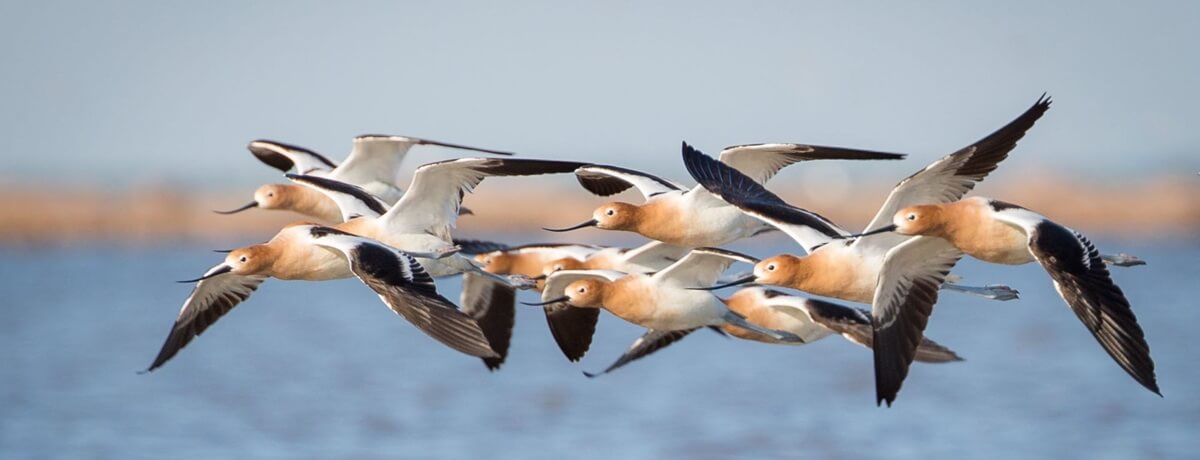
On June 23, the San Mateo County Board of Supervisors voted unanimously to adopt bird-friendly design standards for new buildings in certain unincorporated areas of the county. The new design standards will protect birds from colliding with windows and other structures. Thank you Board of Supervisors for protecting Bay Area birds!
Bird-Friendly Design Is Being Adopted Across the Region
San Mateo County recently underwent the process of updating its Design Review Ordinance. As part of this update, the ordinance for the first time requires bird-friendly design standards (also called bird-safe design) for new and remodeled buildings in unincorporated areas of the county, including the Midcoast, Pescadero, and the Emerald Hills, Palomar Park and Devonshire neighborhoods. With the unanimous vote to approve the new standards, San Mateo County has joined other regional cities including Palo Alto, Mountain View and San Jose in the move to protect birds from deadly collisions with windows and buildings, recognizing the importance of incorporating bird-friendly design practices into new development and redevelopment projects.
What is Bird-Friendly Design?
Bird-friendly standards require buildings to treat their windows and glass with techniques that help birds distinguish them from the surrounding landscape. This could be done by adding opaque dots or lines onto the glass, or by adding external blinds, screens, and shutters. These simple solutions help make the glass more visible to birds, reducing the chance of window collisions. Cities with bird-friendly rules in place have adopted different versions of these rules to fit their cities’ needs and unique environments, demonstrating that bird-safe design can be adapted to a wide range of urban settings while still effectively protecting wildlife.
Bird Populations in the Bay Area Are at Risk
Bird populations in North America have been declining at alarming rates since the 1970s. Populations are down by nearly 30 percent, which is about three billion birds. The effects of this dramatic loss are becoming increasingly visible in our region.
The Bay Area is a critical stop on the Pacific Flyway, a migratory route that millions of birds use yearly to reach food sources, warmer temperatures, and breeding grounds. Our shorelines play an important role for the 300,000 to 400,000 birds that land here, providing a space for birds to rest over winter. Studies of bird populations that use this migratory route and depend on habitats in the Bay Area have documented substantial declines over the past twenty years. Shorebirds have experienced particularly sharp reductions in population numbers. Some suffered as much as an 87% decrease in population. These patterns call for us to work towards environmental policies that protect birds and bolster population sizes.
Bird-friendly standards are essential for reducing bird collisions with glass, which research has identified as a major source of bird mortality. Across North America, hundreds of millions of birds are killed annually due to glass collisions. The American Bird Conservancy estimates that number to be even larger, at more than one billion birds. The problem arises when transparent or reflective glass mirrors the surrounding environment, creating an illusion of the open sky or adjacent vegetation. Birds are unable to distinguish these reflections from the actual trees and sky, and, as a result, may attempt to fly through the glass. Even relatively small or low-lying features like glass railings, transparent corners, and fly-through designs can disorient birds as they move across the landscape.
These types of collisions can happen anywhere birds are present, so it is imperative to adopt bird-friendly design techniques anywhere there is infrastructure that could negatively impact bird movement.
Despite the win in San Mateo County, the work is still not done. There are still many cities that have not begun the process of creating bird-friendly guidelines for their future development. Green Foothills and our partners will continue to work with cities and their staff, urging them to consider creating and implementing rules to protect birds and reduce fatal collision rates.