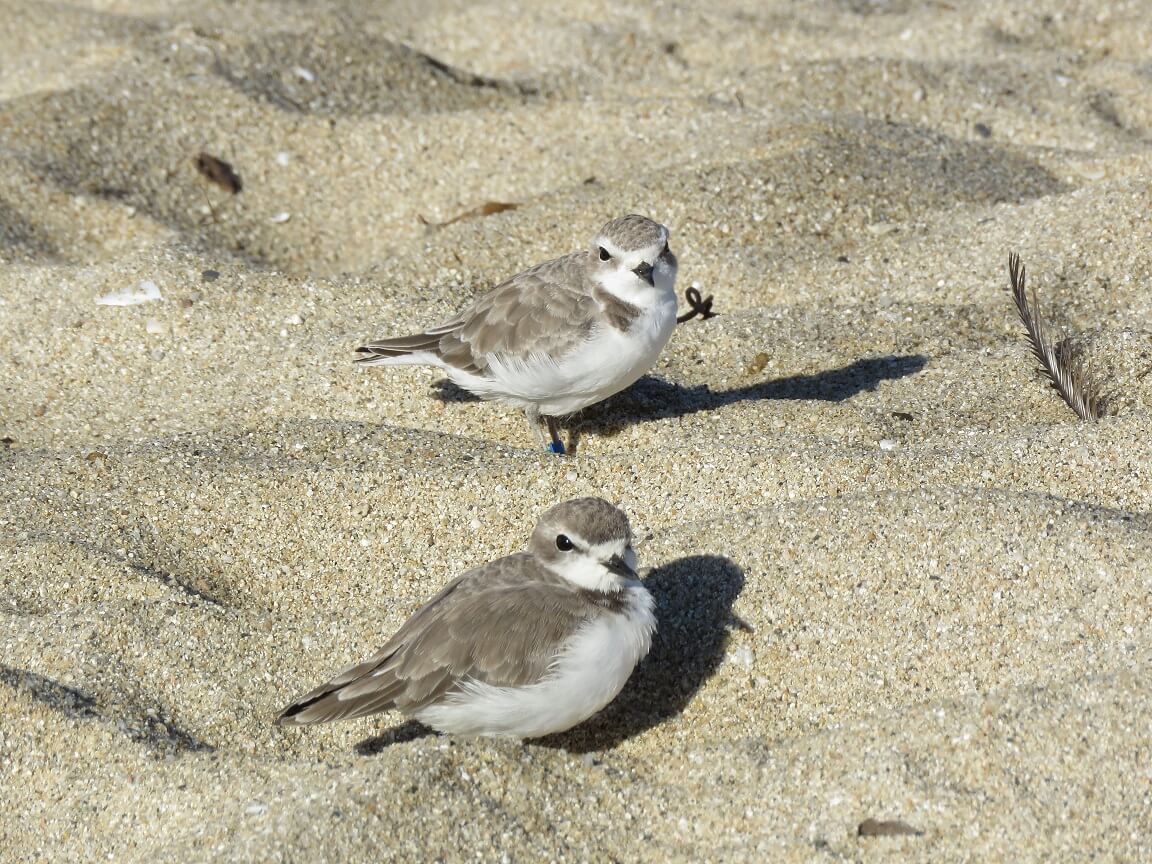
The Bay Area’s Western Snowy Plovers just got some exciting news. According to a new report released by the San Francisco Bay Bird Observatory, these little birds have seen their populations steadily increase since 2020. Hitting an all-time low in 2003 with only 72 birds counted, Snowy Plovers have faced countless threats from habitat loss, human activity, and increased predation. Yet now, a total of 383 birds have been counted along the Bay, marking a thrilling and important milestone for Snowy Plover recovery.
One large contribution to the plover’s success could be their adaptation to the salt ponds that are littered across the San Francisco Bay. As salt marshes were converted into salt ponds and other urban landscapes, Snowy Plovers saw the beachlike layout of salt ponds as a good place to settle in and nest, making this a key habitat in Plover conservation efforts. This creates a challenge for environmentalists, who must sometimes choose between salt marsh restoration or preserving decommissioned salt ponds to support these tiny birds. The San Francisquito Creek Joint Powers Authority’s (SFCJPA) SAFER Bay project, a project that plans to address sea level rise, marsh habitat restoration, and Plover recovery, is a perfect example of agencies and conservationists attempting to properly balance various environmental needs.
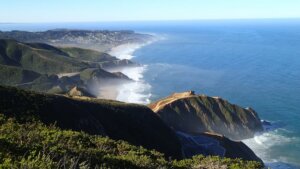
We’re also seeing strides in Plover recovery efforts on our coastside. August 17 marked the official opening of Don Horsley Park at Tunitas Creek Beach where visitors can enjoy scenic coastal habitats and appreciate sensitive, biodiverse ecosystems. Because Tunitas Creek Beach includes nesting habitat for Snowy Plovers, parts of the beach are fenced off to protect their nests. If you visit the park, please keep away from fenced areas to help these little birds survive!
Green Foothills is excited to see the progress that Plovers are making in our regions, and it has reaffirmed our commitment to advocating for these vital habitats. Through our advocacy on issues like the Cargill salt ponds and SFCJPA’s SAFER Bay, we continue to push for the protection of local endangered species and their important habitats. There is still more work to be done to protect not only Snowy Plovers, but also other marsh species like the salt marsh harvest mouse and Ridgway’s Rail, ensuring that the Bay’s essential ecosystems can thrive for generations to come.