
Update: As we mentioned in the article below, Santa Clara County and the State of California filed a lawsuit in federal court to stop ICE from building this facility. In July 2026, Green Foothills and several partner agencies filed an amicus brief in that lawsuit. (An amicus brief allows those who are not parties to a lawsuit to submit their legal opinions to the court.) The amicus brief, drafted by the Center for Biological Diversity, pointed out that ICE violated federal law by starting construction on the facility without the required environmental review. On September 9, a federal court judge ordered ICE to halt construction until the lawsuit is resolved.
On a narrow, winding road next to Llagas Creek outside of Gilroy, construction of a new U.S. Immigration and Customs Enforcement (ICE) detention facility has already begun. An ICE facility at this location raises significant concerns for our community and our environment, including destroying important farmland, impeding wildlife movement, and harming critical habitat. That’s why Green Foothills has joined a broad coalition of local organizations and community leaders who are trying to stop this ICE facility from being built.
What’s Happening
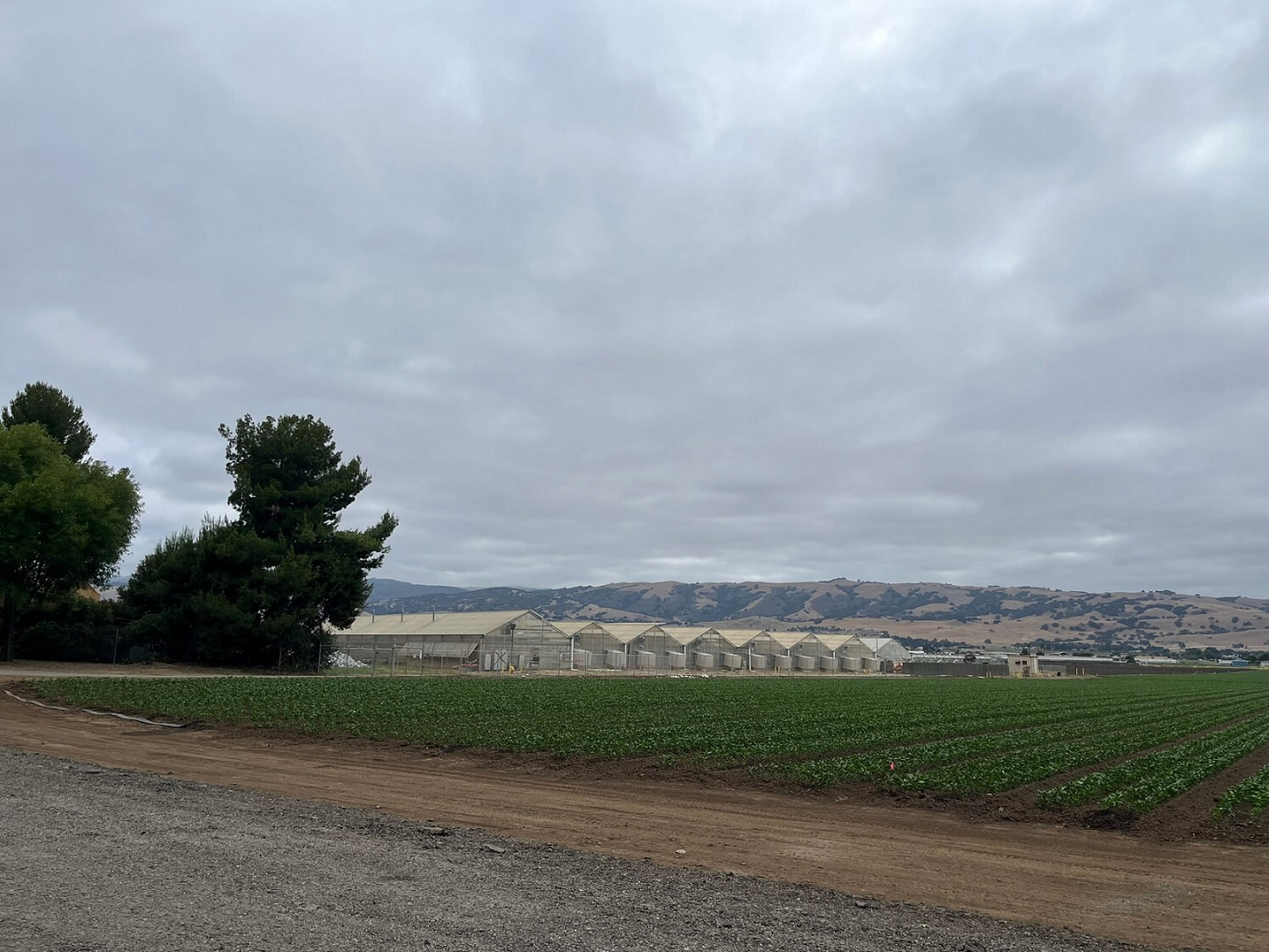
Recently, the Department of Homeland Security quietly and secretively leased 25 acres of farmland in unincorporated Santa Clara County and began construction on a short-term detention facility – without consulting local communities or local governments, or even the farmers next door, about how this could impact their business. They illegally moved forward with construction without environmental review required by federal law, and with complete disregard for local land use planning, environmental laws, and existing legal contracts.
Green Foothills shares the concerns of many in our community about the fear and harm ICE activity in our region could cause. But let us be clear: we would oppose any development proposed on this site because of the severe impacts it would cause to farmland and the environment.
Loss of Farmland We Won’t Get Back
Building an ICE facility at this location undermines Santa Clara County’s decades of careful land use planning to protect our farmland. The county has lost over 20,000 acres of farmland to development in the past 30 years alone, and nearly 30,000 more acres are at risk in the near future. This particular site is an excellent example: zoned exclusively for agriculture, and under a legal contract for agricultural purposes only. Building here defies those protections, and farmland would be lost forever.
Harm to Habitat and Wildlife Movement
The property is bordered by Llagas Creek, which plays an essential role for wildlife in the area. The creek links fragmented habitats throughout the region and provides an important corridor for wildlife movement through areas that are dense with buildings or agriculture. It is also home to a number of threatened and endangered species including steelhead trout, western pond turtles, and California red-legged frogs. Development along its banks would bring noise and light pollution, truck traffic, and increased human presence, which would all deter wildlife from using one of the last remaining pathways they have in the area. This could significantly impact their survival in the region.
Water Safety Concerns
Water usage and water quality are also major concerns at this location. The property runs on wells and a small septic system, which is wholly insufficient for housing up to 150 people, the capacity specified in the plans for the facility. Plus, ICE facilities are known for dangerous overcrowding. There are no municipal water or wastewater systems that currently serve the area. Expanding wells could further strain groundwater supplies. An inappropriately sized septic system could lead to untreated sewage flowing into the creek, groundwater, and existing wells, endangering both the detainees and the wildlife that depends on the creek for survival. Trucking in drinking water would make traffic even worse. The area around Llagas Creek is also a floodplain, so any development along the creek makes the region surrounding it more vulnerable to flooding.
Even worse is that the land was previously used by agricultural research companies that left behind documented leaks and spills of hazardous materials spanning the past 30 years, and toxic materials were dumped into the septic system, without any of the legally required clean up. The federal government has failed to address these issues. If the septic systems fail, toxic chemicals and hazardous waste could also seep into groundwater, drinking water wells, and Llagas Creek.
Harm to Local Farming Businesses
An ICE facility would also be bad for business. Small farms are the backbone of Santa Clara County’s agricultural economy. They would be devastated if farmworkers are too afraid to come to work because of an ICE facility nearby. Neighboring farms would also be impacted by ICE activity, including ICE vehicles coming and going on the narrow two-lane road that farmers use to move their tractors and other equipment.
Green Foothills is collaborating with a coalition of organizations, local governments, and the state to stop the construction of this facility using various strategies. Santa Clara County and the State of California have filed a lawsuit against the federal government for violating several environmental and immigration laws. Community organizations and nonprofits are organizing protests, and local governments are supporting the effort to stop the facility. We will need to use every avenue available to protect our farmland, our wildlife, and our communities.